
Inside Tavelo: What I Learned Visiting a Chinese Carbon Factory in Xiamen
I flew to Xiamen, the home of carbon manufacturing in China, expecting to confirm a stereotype about "made in China" bikes. Instead I met Declan, the 29-year-old owner of Tavelo who still races at a high level and tests his own frames (he's got the scar to prove it). From a freezer room stacked with raw carbon to quality control so precise they saw open flawless-looking wheels to find hidden flaws, here's what the factory floor taught me about where your bike really comes from.
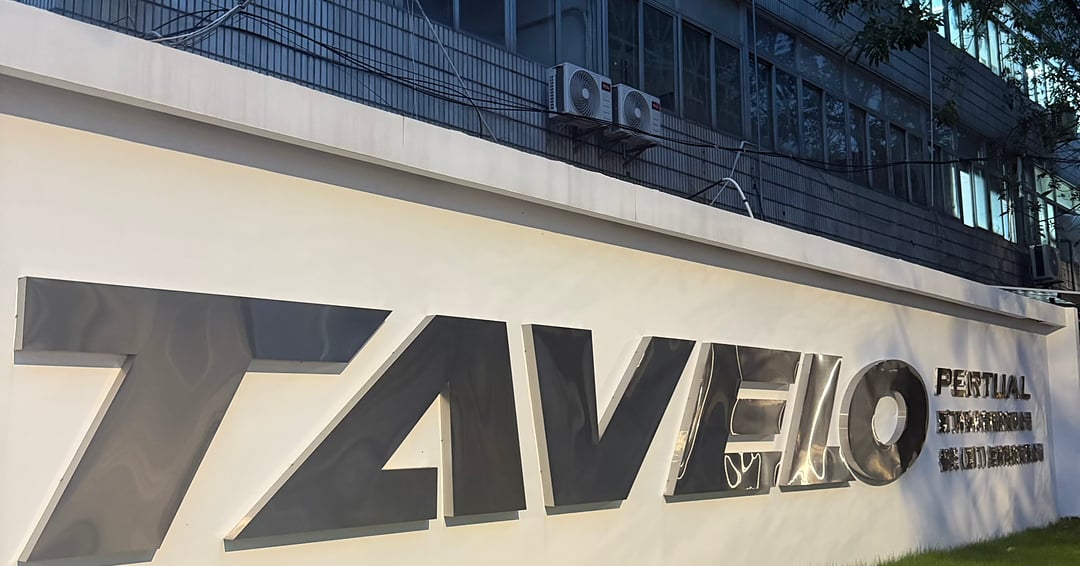
Inside Tavelo: What I Learned Visiting a Chinese Carbon Factory in Xiamen
There's a story we tell ourselves about where bikes come from. The premium ones are "Italian" or "American," and "made in China" is something to whisper about. I flew to Xiamen to see the reality behind that story for myself, and I came home with my assumptions completely rearranged. This is what I found at the Tavelo factory, and why I think every serious cyclist should understand how their bike is actually made.
Arriving in Xiamen
Xiamen sits on the south-east coast of China, and it's no accident that this is where I ended up. Xiamen is the home of carbon manufacturing in China, the heartland where a huge share of the world's carbon frames and components are actually made. It's a place that takes cycling seriously, and that context matters, because the factory I'd come to see isn't some anonymous shed churning out parts. It's run by people who actually ride.
I stayed at the Conrad, and I was picked up for the factory by a friendly bloke I assumed was one of the staff. We got chatting, and it slowly dawned on me that I wasn't being collected by an employee at all. The owner of Tavelo is quite behind the scenes, so I'd genuinely asked him whether he just worked there. It turned out I was being driven around by Declan, the actual owner. He's 29. And within about ten minutes, I understood that the age was the least surprising thing about him.
The man who tests his own frames
Plenty of factory owners will tell you their products are race-proven. Declan proves it the hard way. He tests the bikes himself, at speed, in real races. He's still actively chasing championships and racing at a high level, which is almost unheard of for someone running a manufacturing business. He rolled up his sleeve at one point and showed me a long scar running down his arm, a souvenir from pushing one of his own bikes to its limit. That scar told me more about Tavelo's quality philosophy than any brochure could. This is a man who finds out where the limits are by riding into them.
But it isn't just Declan. One of the things that impressed me most was the team around him. The engineers at the factory have decades of experience between them, and many were sourced from some of the biggest names in the industry. Crucially, they're real riders too. The culture reflects it. When the people designing and testing your frame ride as hard as the people who'll buy it, you get a very different kind of product.
His path into all this helps explain the obsession. His uncle had been manufacturing OEM frames for years and gave Declan the foothold, and the hard-won know-how, to start out on his own. His dad was a cycling clothing manufacturer, so the family already had a foot firmly in the cycling industry. Before Tavelo became what it is, Declan was also the importer bringing Wilier products into China, so he learned the market from the retail and brand side, not just the factory floor. On top of all that, he was racing for a Continental team, and that racing platform became a genuine engine for building Tavelo's reputation. He wasn't selling a product he didn't use. He was winning on it.
Watching carbon wheels being made
The part I'd most wanted to see was the carbon wheel manufacturing, and it did not disappoint. The first surprise came before any wheel was even built. I had no idea that raw carbon has to be stored frozen, but there it was: a huge room filled with rolls of carbon fibre, kept cold to stop the pre-impregnated resin from curing before it's meant to. Standing in that cold store, looking at racks and racks of the raw material that becomes a bike, was one of the coolest moments of the trip, literally and figuratively.
From there, watching a wheel come together is a strange mix of high-tech and handcraft. Layer by layer, the carbon is laid up by hand into moulds, the orientation of each layer dialled in to put strength exactly where the load goes. Then it's cured under heat and pressure until those soft sheets become a rim that's both featherweight and astonishingly stiff. So much of it still comes down to human skill. We imagine "factory" and picture robots, but the people laying up these rims have an eye and a feel for the material you can't automate.
Quality control that's next level
If the wheel build impressed me, the quality control is what genuinely changed my mind about Chinese manufacturing. Declan showed me a bin of finished wheels that, to my eye, looked perfectly fine. Flawless, even. Then he picked one out, took a saw to it, and cut it open in front of me. Inside, under closer inspection, were tiny imperfections I never would have spotted, the exact flaws that had seen those wheels pulled from the line. It's wild how the combination of trained human eyes and machinery catches things that precise.
The frames get the same brutal scrutiny. Tavelo puts them through torture rigs that flex and load the frame tens of thousands of times to simulate years of riding, impact tests that slam into the frame to see what it takes to break it, and fatigue cycles that go on long after any normal rider would have given up. These are the same kinds of tests, often to the same international standards, that the big-name brands rely on. Watching a frame get hammered over and over without failing, you start to understand exactly what you're paying for when you buy a quality carbon bike, and how much of it is invisible.
The part that surprised me most
Here's the thing I wasn't prepared for. Walking the factory floor, I kept recognising shapes. Frames and components I knew from premium brands, names every cyclist would recognise, being made right there. I won't name them, because the realities of OEM manufacturing are more nuanced than a simple "this brand is secretly that factory." But the broad truth is one the industry doesn't advertise: a surprising amount of the world's premium carbon is made in a handful of skilled factories like this one, regardless of the badge that ends up on the down tube. The marketing tells one story. The factory floor tells another.
You don't even have to be inside to feel it. At one point we stepped outside to get some fresh air, and there was the Winspace factory right there, and on the other side, the CST tyre manufacturer. A whole cluster of names you know, sitting side by side in the one place.
That's not a reason to be cynical about brands. Design, engineering, geometry, ride feel and quality control genuinely vary. But it should make you think differently about what the badge is really worth, and where the value actually sits.
Dinner, and what's coming next
Declan couldn't have been more accommodating. After the tour, he took me out to a local barbeque place, the kind of spot you'd never find as a tourist, packed and smoky and brilliant. He'd also invited his childhood friend Xavian along. Xavian is training for a professional series of Ironman races, and over dinner the conversation turned to what Tavelo has planned. That's how I learned Tavelo intends to release a TT bike this year, which makes a lot of sense given the company they keep.
Xavian had also taken a look at the app we're about to launch, triboard.app, and his feedback was genuinely positive. Both he and Declan were honestly shocked at the level the MKP team is operating at when it comes to building apps. That meant a lot, coming from people at the very top of the sport.
I came to Xiamen half-expecting to confirm a stereotype. Instead I met a young, obsessive rider who learned the trade from his family, cut his teeth importing and racing, and now builds and personally tests the gear he sells, surrounded by a team of veteran engineers who ride as hard as he does. The "made in China" story we tell ourselves is out of date. The better question isn't where a bike is made. It's who made it, and whether they'd ride it themselves.
Declan would. He's got the scar to prove it.
That's a big part of why we're excited about what's next. We intend to grow Tavelo here in Australia, so keep an eye out, because you can expect to see a lot more Tavelo bikes from us soon.
Want to know more about how the bikes we sell are made, or what to actually look for in a quality carbon frame? Come and have a chat with us at mkpbikes.com.au. We're always happy to talk shop.